
Interior Systems
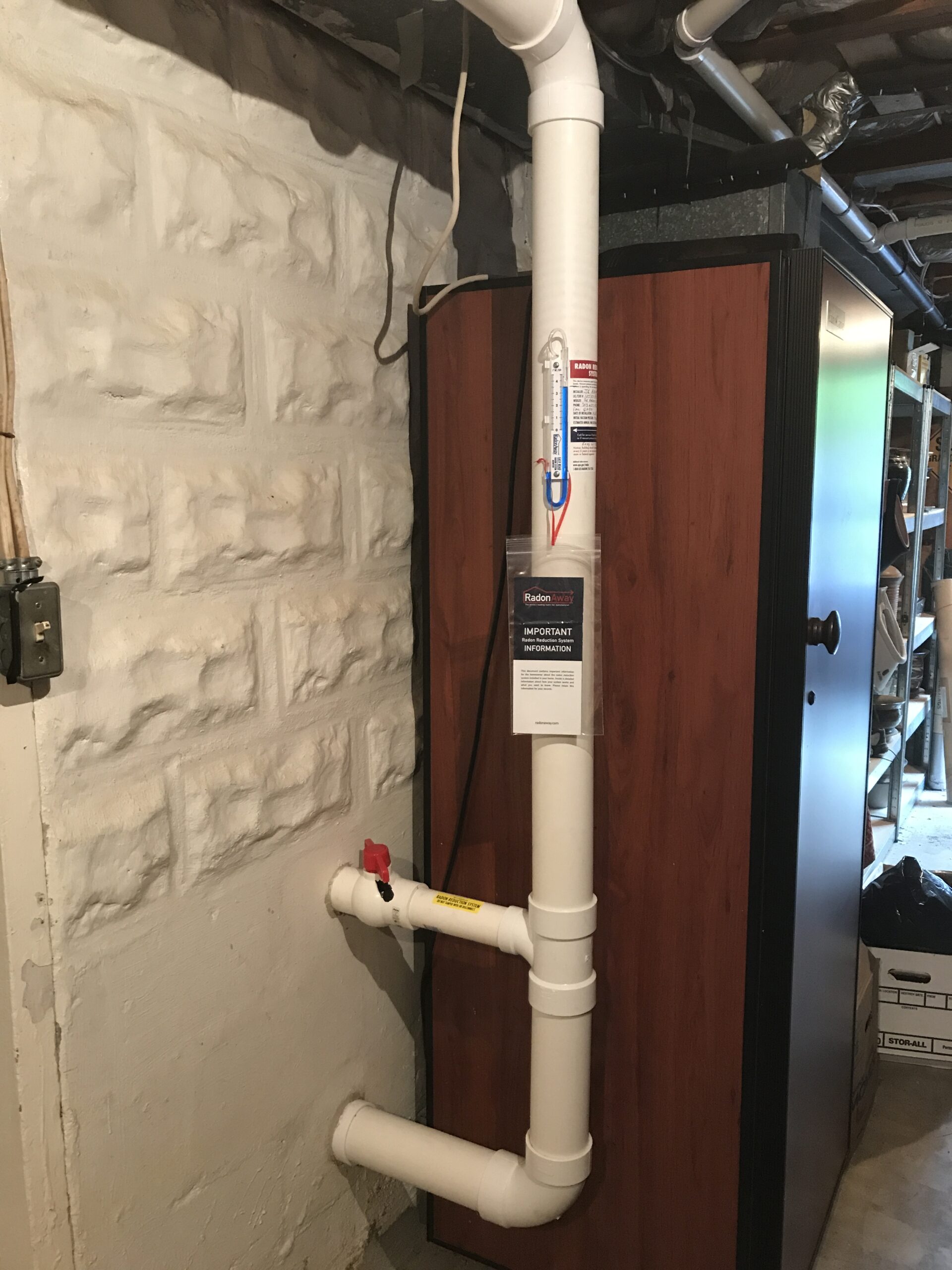
All interior piping goes through a lot of consideration of it final appearance. I like to consider the present and future use/s of the space considered for any available options. I make the most of any space needed for the pipe so that you get the most use of the area, this includes attic and garage space. The smallest pvc pipe that can be used is three inches and is most common. A monometer is installed to monitor the air flow of a system. This does not tell you the level of radon.
Exterior Systems
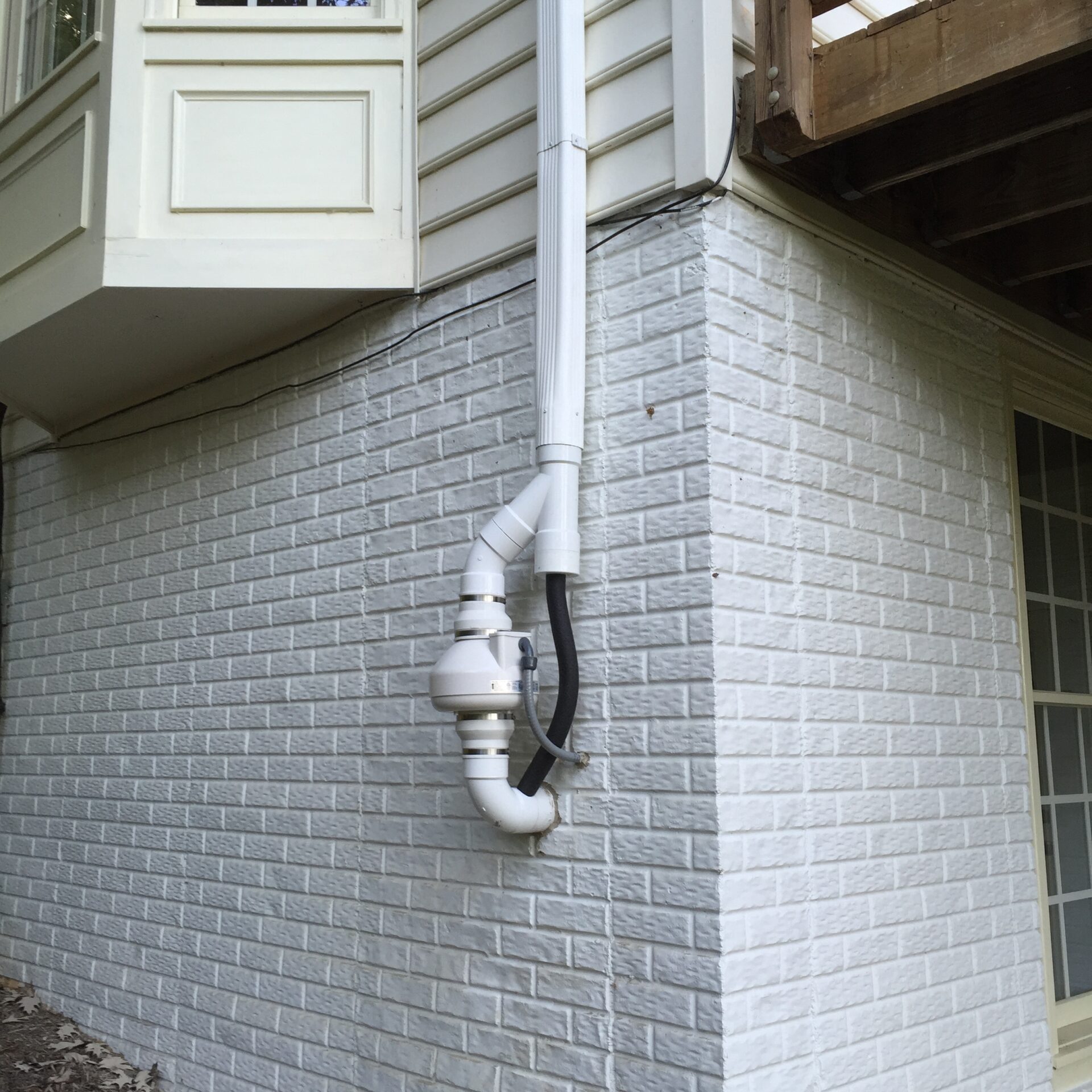
All exterior piping goes through a lot of consideration of it final appearance. I like to consider the present and future use/s of the space considered for any available options.
Most of the exterior systems I install, do switch over from the pvc pipe after the fan, to a three by four vinyl downspout once outside. Cleaning the downspout before assembly allows all sealants to perform at their best. I seal all joints to prevent air and condensation leakage. I use four screws at all joints, so that it becomes one piece. This product will not rust or dent and can be painted, by the homeowner during or after installation.
All exterior systems are installed with a condensation by pass system. This is not required, but is recommended by “Radonaway”, the manufacture of the fans used. The President of Radonaway told me, “John, by doing this you can now state that you will get fifteen to twenty years from our fans”. Most Radon away fans have a five year manufacture warranty. My systems are also designed to drain most exterior condensation back into the system to prevent as much exterior ice buildup in the winter months. Also, all my fans can be replaced without removing a single part from the exterior of the home.
It is the protocol of the EPA that any piping point straight up at the discharge location, usually twelve inches above the roof line. A screen is installed at all discharge points to prevent animals from entering the system. All exterior electrical line are installed in a gray flexible conduit.
What’s the difference between interior and exterior radon system installations?
Interior systems route the vent pipe and fan inside the home, often through closets, garages, or attics, keeping most components out of sight. Exterior systems place the fan and pipe on the outside of the home, which can simplify installation when interior routing isn’t practical. Both approaches safely vent radon gas above the roofline to protect indoor air quality.
🧰 Why choose an interior radon system at my Arlington or Northern Virginia home?
Interior systems are a great option when you want the mitigation setup hidden from view and protected from outdoor weather (rain, sun, snow). These systems can be more aesthetically discreet and keep system components shielded inside the structure.
🌤️ When is an exterior radon system the better choice?
An exterior installation might make sense if your home has limited attic/garage routing space or if you prefer a faster installation with minimal interior impact. Exterior systems can often be installed without modifying finished rooms and still provide effective radon reduction.
🏠 Will either system affect my home’s appearance?
Interior systems typically keep components out of sight with only the roof vent visible, while exterior systems will have vent pipe and fan visible on an outside wall. Many exterior setups can be painted or blended with your home’s design for a less noticeable look.
🛠️ How do installation pros decide which system is right for my home?
A professional assessment considers your home’s layout — foundation type, attic/garage access, wall space, and structural features. From there, the installer recommends the system that balances effectiveness, cost, and appearance for your particular property.